

In this article, you’ll learn:
Cloud storage services like Microsoft OneDrive and Google Drive make managing digital assets much easier. They allow you to back up files, set up sharing, share files with other participants in your workflow, and track changes made by different users. All this looks good as long as you're working with only one storage.
However, there are situations when you have to use two cloud services or even more applications. In this situation, the most practical approach is usually to sync your storages.
In this article, we’ll explain how to transfer files from OneDrive to Google Drive. We’ll walk through a few different ways to do it — manual, semi-automated, and fully automated.
Why Transfer Data from OneDrive to Google Drive?
The decision to migrate OneDrive to Google Drive is made when you need to change your service. If the current option doesn't suit you in some way, you can decide to change providers. Although it's easier said than done, you still need to copy all your files to the new storage.
For businesses, this can happen when different storages are used by different participants in the workflow:
- Customer and contractor;
- Employees of different departments or branches;
- Managers and specialists;
- Company and subcontractors.
And these are not all scenarios where you may need to migrate from OneDrive to Google Drive. For example, let’s say that during the COVID-19 pandemic, a user was working remotely and wanted to synchronize two different storages — their company used Microsoft's service, while they were subscribed to Google. Another option would be backup. No matter how reliable the cloud storage is, there is always a chance of data loss due to hacking or insider work. It is never a bad idea to duplicate vital information.
So, why not leave it at that? Managing different cloud storage can be a real headache. If working with a large number of files, you will regularly lose important documents, wasting time and, in some cases, money. With different versions of digital assets appearing every day, normal business processes can be disrupted, which will negatively affect the company's financial results and reputation. And even if you set up synchronization, it won't solve all your problems once and for all — information can be lost or distorted when copied due to various errors.
That's why standardization is the ideal option. We've already talked about the advantages and disadvantages of certain services in our Dropbox vs OneDrive vs Google Drive review. When a team sticks to one cloud storage service and sets up shared access around it, day-to-day work becomes much smoother. People stop tripping over “which version is correct,” there are fewer slip-ups, and fewer awkward moments where someone assumes a file is updated when it isn’t.
Now let’s move on to the actual question: how do you transfer OneDrive files to Google Drive?
Solution 1. Use OneDrive and Google Drive Desktop Apps
Follow the steps below:
1. Install OneDrive App by downloading it here.
- Sign in to your account with your username and password.
3. Install Google Drive for Desktop by downloading it here.
4. Sign in to access cloud storage.
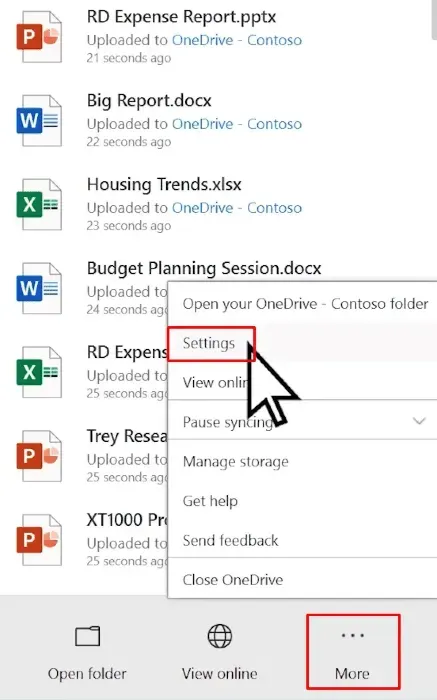
- Launch OneDrive App, click More button at the bottom, and then select Settings.
- In the window that opens, click Choose Folders.
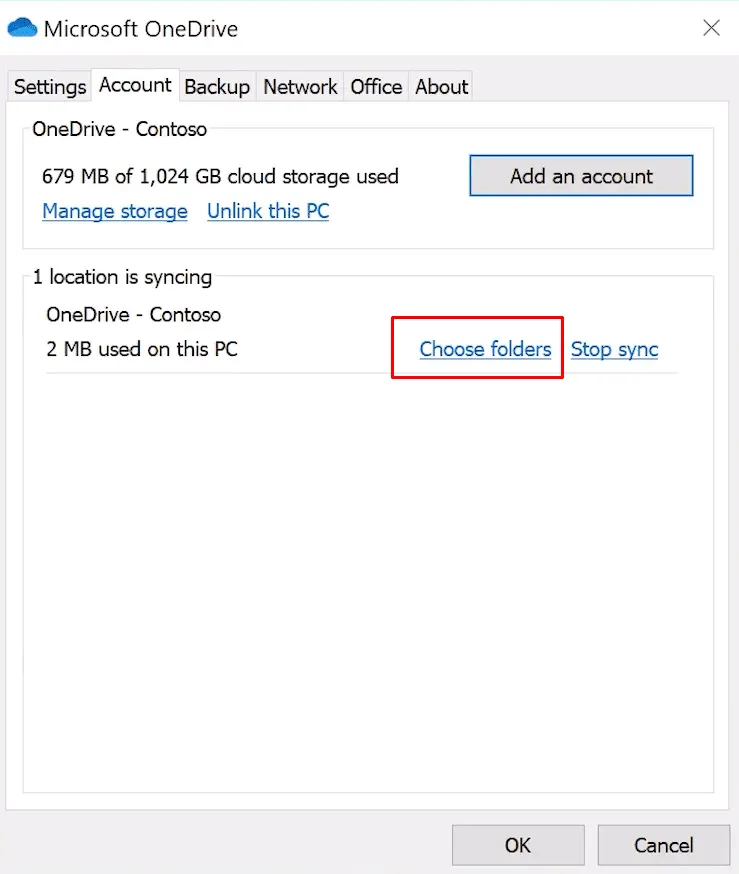
- Select folders that will be synchronized with your cloud storage. All files in them will be automatically uploaded to OneDrive and vice versa.
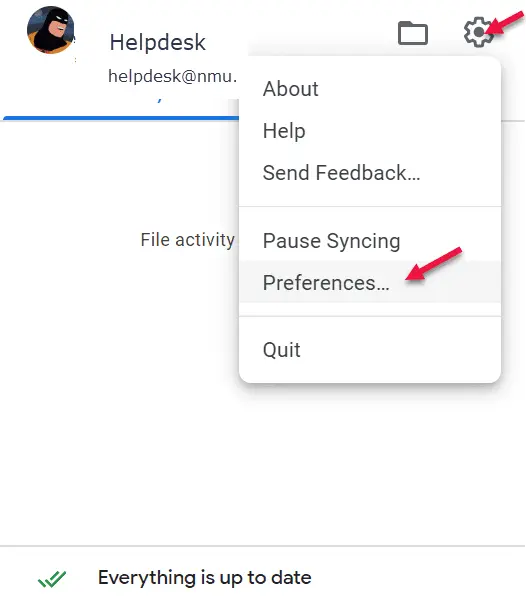
- To transfer files from OneDrive to Google Drive, you need to synchronize the second service with the same folders. Launch its desktop application, click Settings button in the upper right corner, and select Preferences.
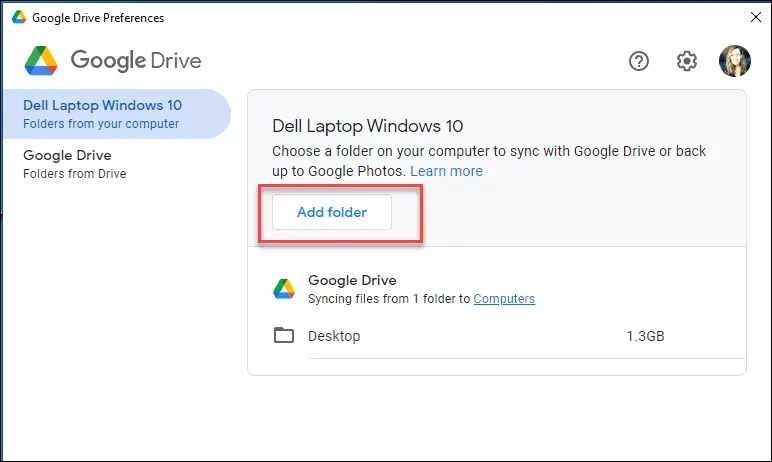
- Click Add Folder and select the same folder you previously synced OneDrive with.
Done! After that, files will be copied from One Drive to Google Drive automatically — you won’t need to manually move anything each time. This option is considered “easy mode” because you’re not installing extra migration tools or touching code. You just connect both apps to the same folder and let them do their job. But there are downsides:
- Synchronization will be rather slow due to the limitations of desktop programs;
- Applications will not be able to process files larger than 15 GB;
- You will have to allocate a certain amount of disk space on your computer;
- You can only synchronize files that belong to you. You will have to manually download the digital assets of other users that you share.
Solution 2. Download Your Files from OneDrive and Upload Them to Google Drive
The instructions are as follows:
1.Open OneDrive in your browser and log in to your account.
2.Find files and folders you need.
3.Select them with check marks and click Download button at the top.
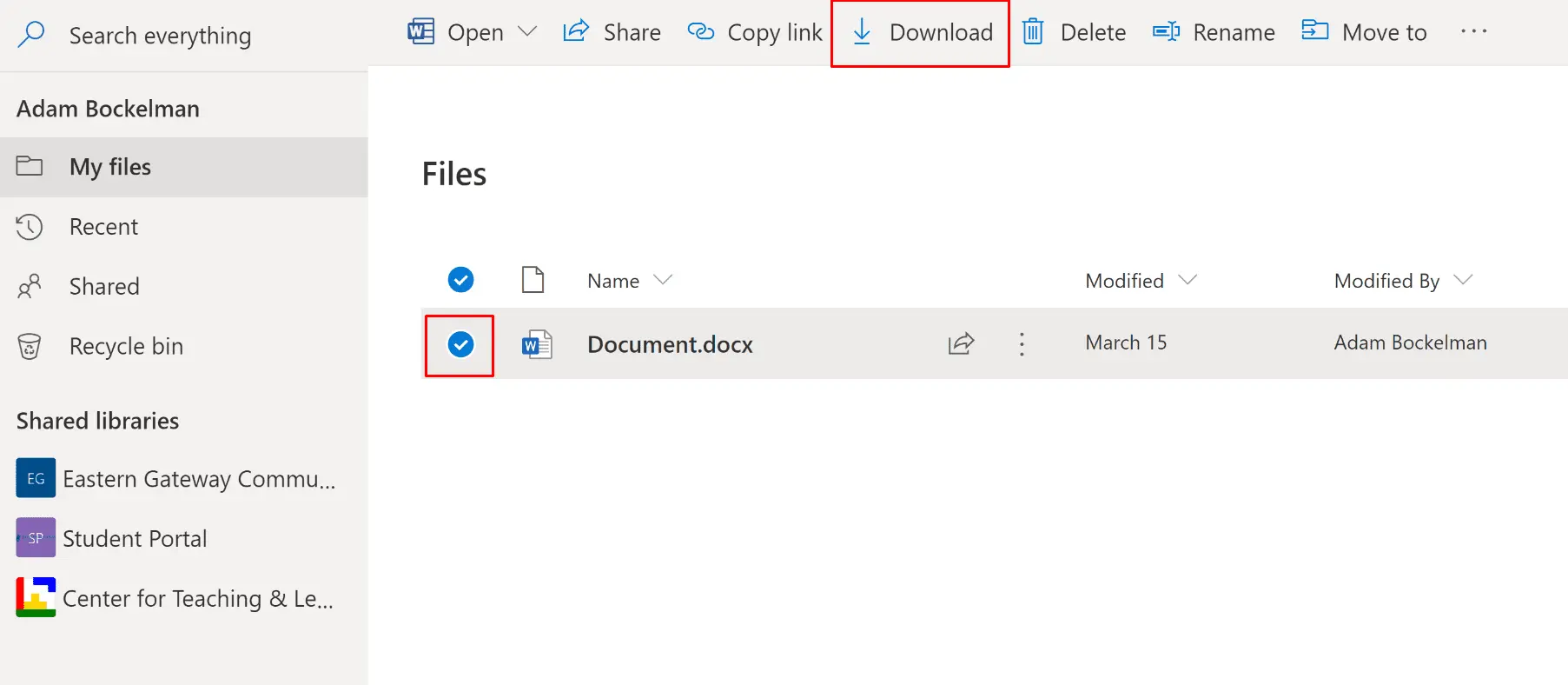
4.The files will be downloaded to your computer to the folder selected in browser settings.
5.Open Google Drive and log in to your account.
6.Click New button and select File Upload or Folder Upload, depending on your needs.
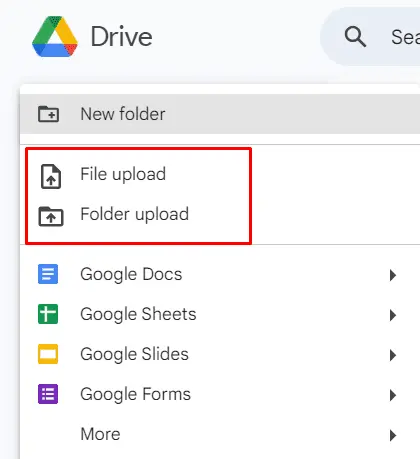
7.Select files you need and wait for them to upload.
This is the most straightforward “do it yourself” method. You don’t need extra apps or services, and you can move not only your own files, but also content that was shared with you.
At the same time, it comes with predictable drawbacks:
- You'll have to repeat the process with each new file;
- Frequent manual copying is time-consuming;
- There is always a risk of making a mistake by omitting certain files or selecting wrong versions;
You'll have to use the resources of your PC again.
Solution 3: Use a Third-party Tool
If you want the process to feel more like a migration (and less like “download everything, then upload everything”), you can use a dedicated service such as VaultMe or Multcloud. The exact steps depend on the tool you choose, so the workflow won’t look identical across programs. But they all include the following steps:
1.Create your account with an online data migration service.
2.Connect both cloud storages — usually, you just need to enter your login and password.
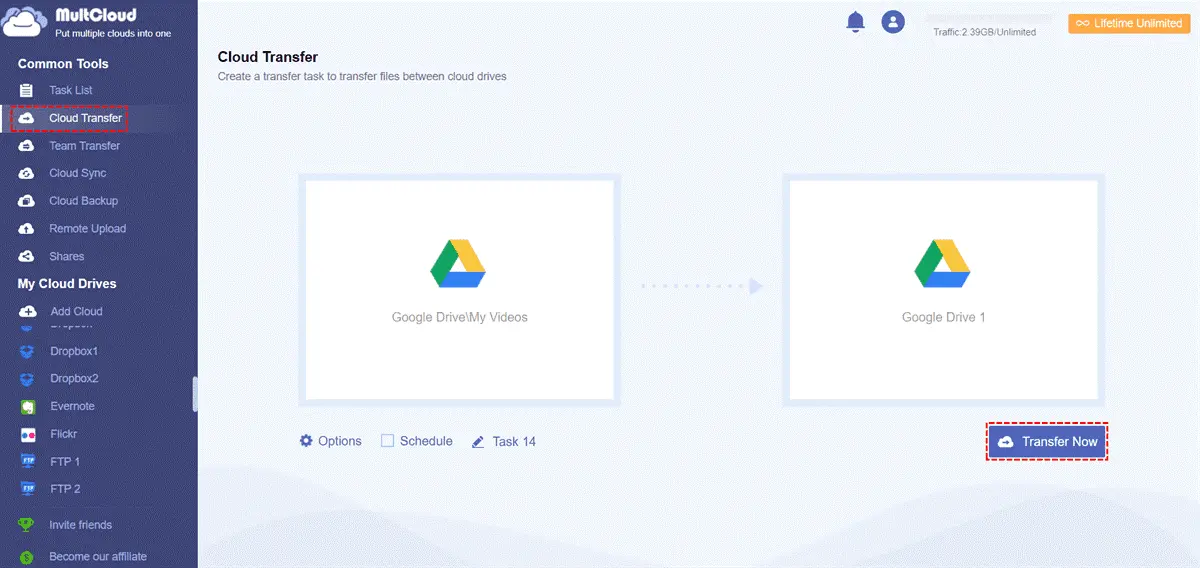
3.Select Cloud Transfer, Migrate, or Cloud Sync function. For example, in Multcloud, it looks like this:
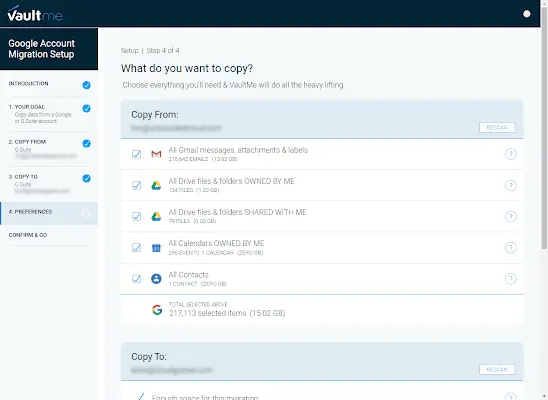
4.Select additional options if necessary. For example, VaultMe allows you to transfer contacts, emails, and calendar entries:
The main advantage of using a third-party application to transfer OneDrive to Google Drive is that the process is automatic. You also have more options and settings available to you. Plus, you'll receive warnings about errors and data damage. Of course, there are also disadvantages:
Transfer from OneDrive to Google Drive using a third-party service can be considered a cybersecurity risk. It is unlikely that you will be allowed to connect such a program to corporate storage.
- Most applications are paid, so using them will increase your spending.
- Migration process uses a third cloud storage, which makes the process rather slow.
Solution 4. Sync OneDrive to Google Drive with Rclone
Rclone is another option. It’s a free cloud storage management application that works through your operating system’s command line. Here’s how to move files from One Drive to Google Drive with Rclone:
1.Download Rclone at this link and install it.
2.Run the application from the command line.
3.Enter the command "rclone config." You will see the following menu:
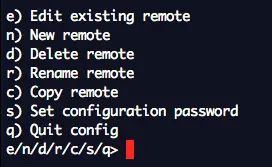
4.Press "n" and Enter to select New Remote.
5.Select Microsoft OneDrive from the list. Now, it's number 13.
6.When the program asks for App Key and App Secret, leave these lines blank by pressing Enter.
7.Answer Yes to the question "Use auto config?" by pressing Y and Enter.
8.The program will automatically launch browser — you will only have to log in to your account. The procedure is as follows:
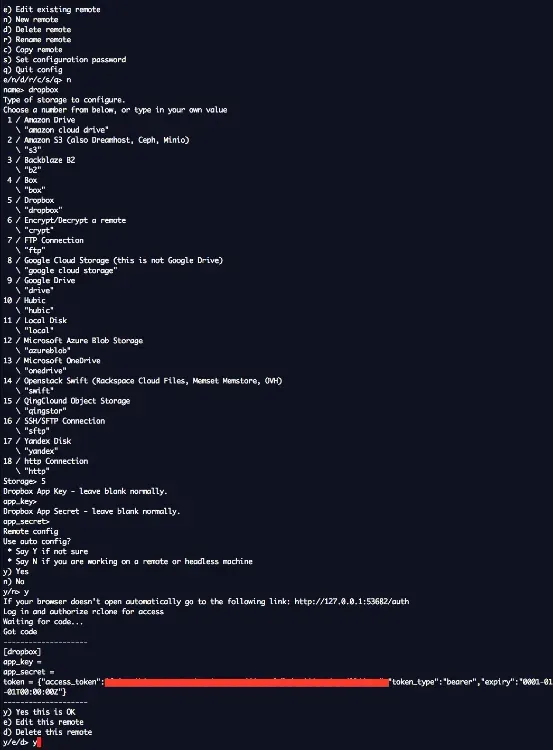
9.To set up file transfer from OneDrive to Google Drive, follow the same steps with the second cloud storage.
10.Enter command "rclone copy gdrive:FOLDERNAME/ dropbox:FOLDERNAME/" replacing FOLDERNAME with the actual folder name. If you only want to transfer new versions of files, add "--update" at the end. Since the process can be long, many users want to see a list of the materials before copying them. To do this, add ""--update --dry-run" to the command.
11.If you want to backup OneDrive to Google Drive, making the latter an exact copy of the former, use command "rclone sync gdrive:FOLDERNAME/ dropbox:FOLDERNAME/"
The program's maximum file download speed is limited to 100 Mbps, which is much higher than its competitors.
Careless usage of Rclone can lead to the loss of important data. Therefore, before starting a certain process, it is worth checking by adding the "--dry-run" flag to the command.
Conclusion
Knowing how to migrate OneDrive to Google Drive makes it much easier to keep your cloud storage aligned, reduce day-to-day errors, and keep workflows predictable. The “best” method depends on what you’re transferring and how often files change.
If you only need to move a small batch of files, manual download + upload is usually the simplest option — it’s clear, safe, and quick. If you’re dealing with a large migration, using Rclone from the command line is often the more practical approach.
And if your storage is constantly being updated, automation matters. For smaller volumes, syncing OneDrive and Google Drive desktop apps to one local folder can be enough. For larger volumes of materials, specialized online services are usually the better fit.
Did you enjoy this article? Give Pics.io a try — or book a demo with us, and we'll be happy to answer any of your questions.


