

In this article, you’ll learn:
PDFs aren’t just “a file with pages.” They also carry extra info in the background — metadata. It can show things like who created the document, when it was made, when it was edited, and even which app was used. Most of the time nobody thinks about it… until a PDF gets sent to a client, a partner, or posted publicly.
That’s where metadata becomes awkward. A document can look perfectly clean, but still quietly reveal the author name, internal dates, or other details that weren’t meant to leave the company. If privacy or security matters (or if the file is going outside the team), it’s worth checking what’s attached to the PDF before sharing.
There are a few ways to remove it. Adobe Acrobat Pro can do it. PDFelement can do it. Online tools can do it too (with the usual “don’t upload sensitive docs” warning). Windows is the annoying part: File Explorer looks like it has a “remove personal info” button, but for PDFs it often doesn’t actually remove anything.
Use our free metadata remover to clean metadata from any PDF file in one click.
What is PDF Metadata
PDF metadata holds key info about the document, such as the author's name, the date it was created, and sometimes even the software used to make it. Think of it as a digital fingerprint that tells you more about the file's history and origins.
Metadata in a PDF document can contain sensitive details. A simple example: a PDF gets shared externally, and suddenly the recipient can see the original author name or a timeline of edits. That’s not always a disaster — but it’s also not always what should be visible.
So what’s usually inside PDF metadata? Common fields include: title, author, subject, keywords, “creator” (like Adobe Acrobat), and created/modified dates. Cleaning those fields helps keep the file focused on the content, not on who touched it and when.
Why Remove Metadata from PDF
Removing PDF metadata is mostly about keeping your sensitive information secure. If you're sharing a PDF, especially in a professional or public setting, you might not want to reveal this information.
Imagine sending out a business proposal. The metadata could show all the revisions and edits, including the software you used. This could unintentionally give away your business strategies or your document's authenticity.
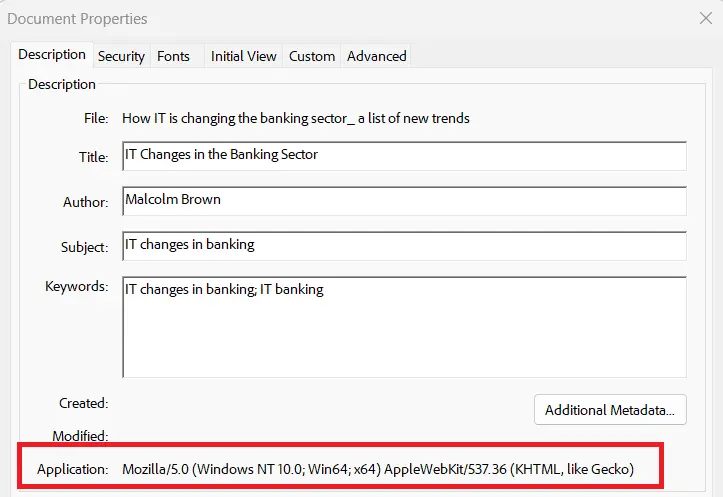
In short, PDF metadata removal helps prevent the accidental disclosure of confidential information, protects your intellectual property, and ensures that only the intended content is communicated. In other words, it means you have higher control over who can access essential details about your PDF files.
How to Remove PDF Metadata with Adobe Acrobat DC
Adobe Acrobat DC (Pro) is one of the most reliable ways to remove metadata, but the full cleanup features are part of the paid version.
The basic flow is:
- Open the PDF in Acrobat
- Go to File → Properties
- In Description, edit obvious fields (author/title/keywords) if needed
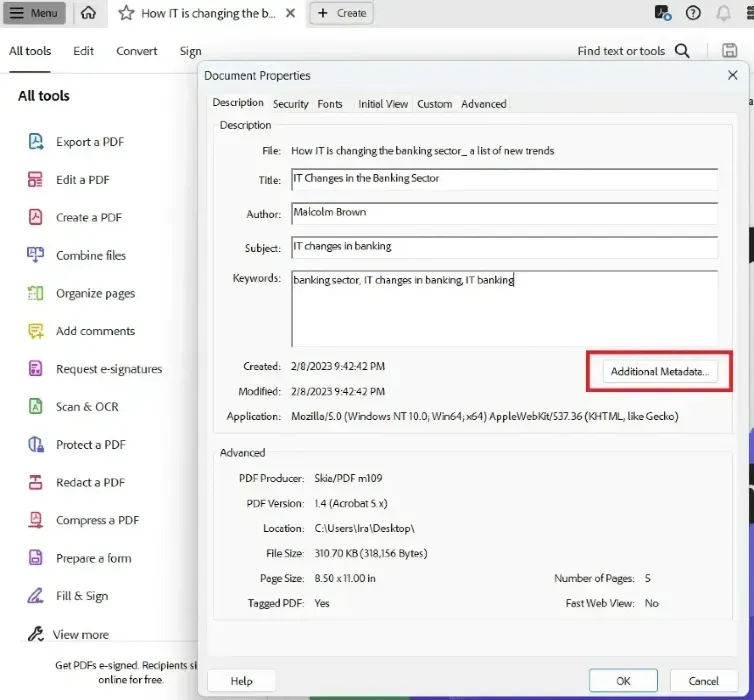
- For a full wipe: Additional Metadata → Advanced → Remove All
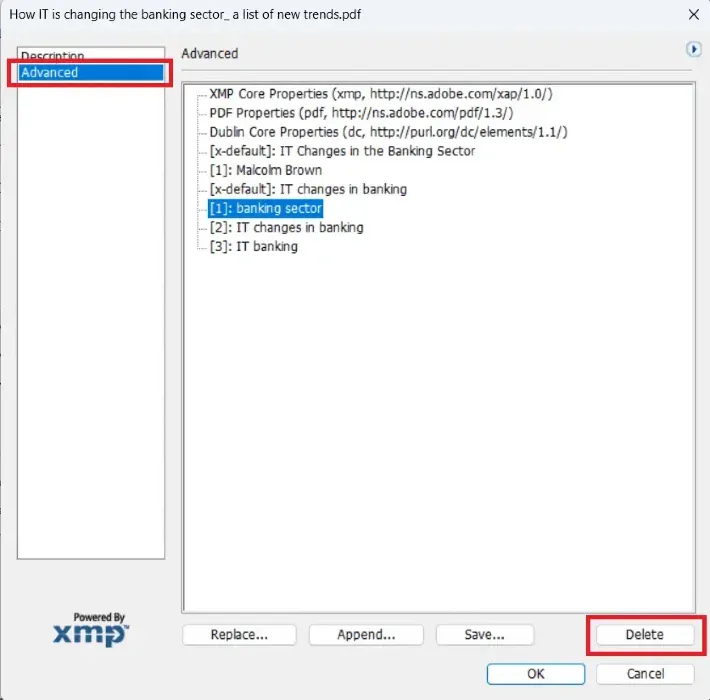
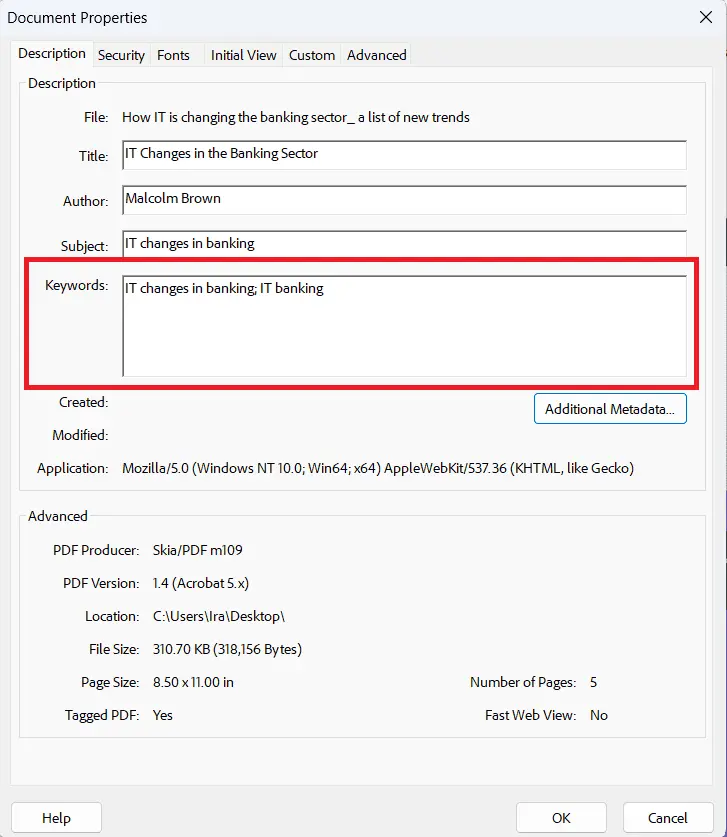
After saving, it’s worth reopening Properties to confirm the fields are actually blank (or updated).
One more thing: metadata removal doesn’t hide text that’s visible in the document itself. If the PDF contains info that must not be shared (names, emails, prices, IDs), use Redaction (usually under Protect) so the content is truly removed, not just covered up.
Don't forget about our simple solution - PDF metadata remover.
Remove Metadata from PDF with PDFelement
PDFelement is an Adobe Acrobat alternative where one can delete metadata information from PDF files. It's cheaper than Adobe Acrobat DC and has a much more intuitive interface. PDFelement can be also downloaded to both Windows and macOS. Let's see how this PDF metadata remover works:
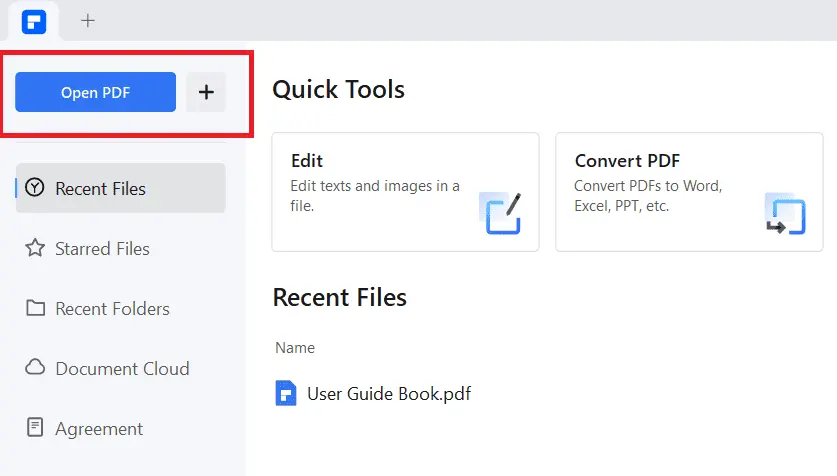
Open the PDF: Launch PDFelement and open the PDF file from which you want to remove metadata. You can do this by clicking on the "Open PDF" button or a plus sign next to it and browsing to the file on your computer.
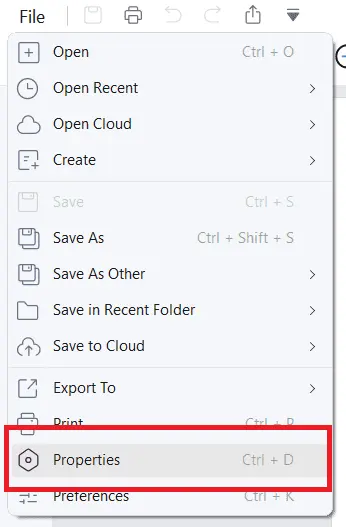
Access File Properties: Once your PDF is open, go to the "File" menu located at the top of the screen. From the drop-down menu, select "Properties." This will open a window showing the PDF's properties and metadata.
Or, you can right-click on the opened PDF file and choose Document Properties in the drop-down window.
Remove Metadata: In the Properties window, you'll see information like the author, subject, keywords, and more. To remove this metadata, simply delete the text in each field or modify it as needed.
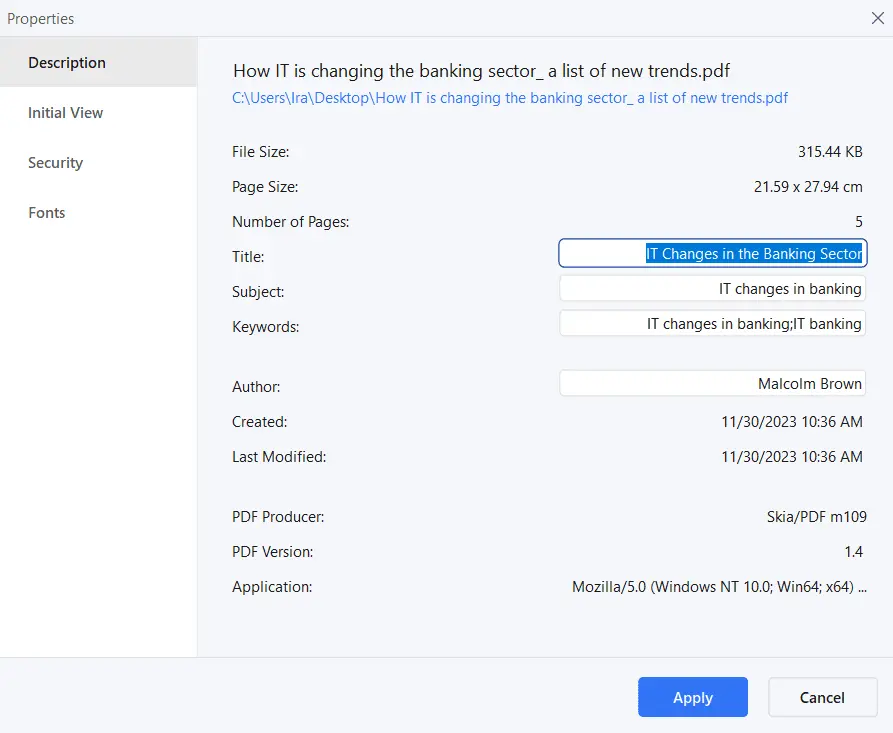
Save Changes: After you have removed or edited the metadata, click the 'OK' button to close the Properties window. Then, save your document to apply these changes. You can do this by clicking on the 'File' menu and choosing 'Save' or using the quick save shortcut (Ctrl + S on Windows, Cmd + S on macOS).
Double-check Removal: To ensure that the metadata has been successfully removed, you can reopen the Properties window and verify that the fields are now blank or show your updated information.
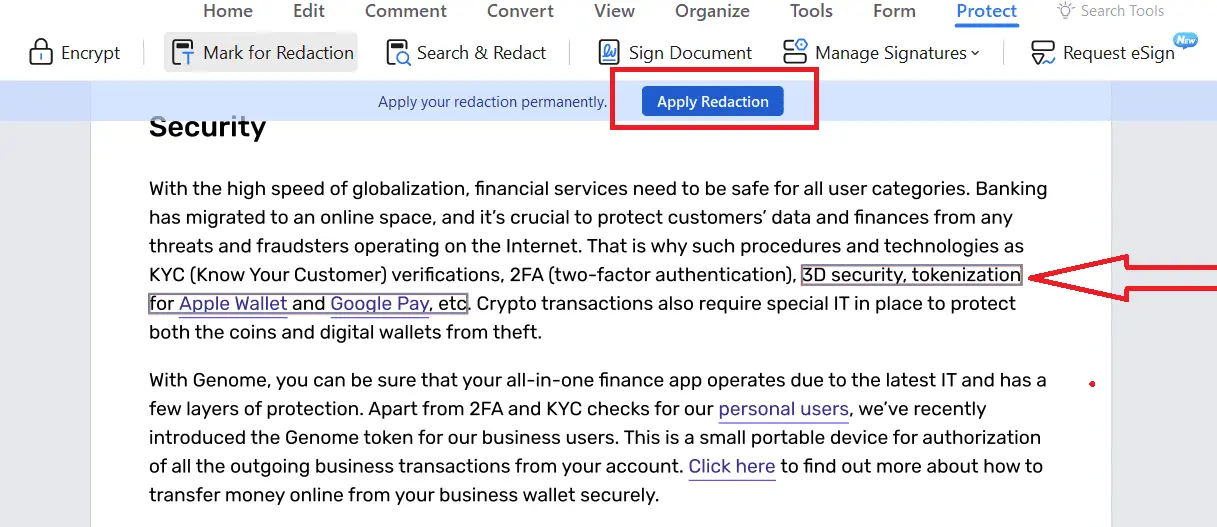
If you need to hide any information on the document, go to the Protect tab, select the necessary text, and click on Apply Redaction. This will hide data if you share PDF documents externally. For repeatable workflows, code-driven content removal permanently removes selected text and related metadata before external sharing.
How to Remove Metadata from PDF on a Computer
Windows OS
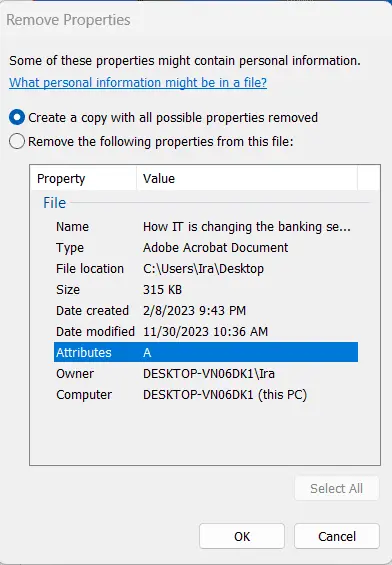
On Windows, it’s tempting to try the built-in option: right-click the PDF → Properties → Details → Remove Properties and Personal Information. The problem is that it often doesn’t work for PDFs the way people expect.
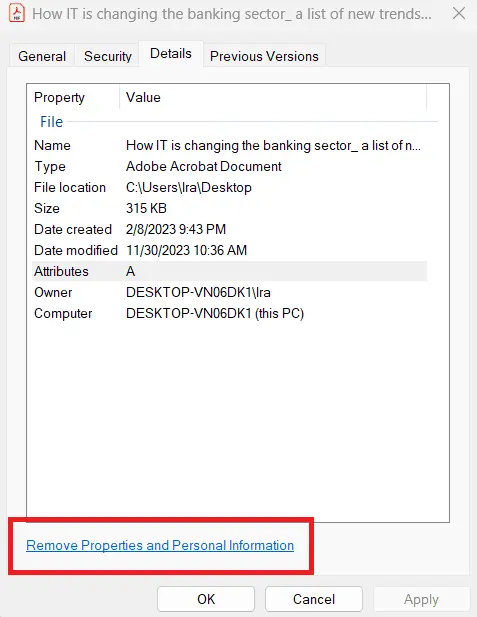
The window opens, choices can be clicked… and the metadata stays the same. That removal feature is much more consistent for things like photos or some media files, not PDFs.
macOS
On macOS it’s not much better. Finder can show basic info (right-click → Get Info), but it’s not a proper “metadata scrubber” for PDFs.
How to Remove Metadata from PDF Online
Online removers are fine for harmless files. Upload → clean → download. Just don’t use them for anything confidential, because the “metadata problem” turns into a “file uploaded to a third party” problem, which is usually worse.
Final Thoughts
In short: PDF metadata is easy to ignore, but it’s also easy to clean once it’s on the radar. If a file is going outside the team, checking metadata is a small step that can prevent unnecessary oversharing.
Did you enjoy this article? Give Pics.io a try — or book a demo with us, and we'll be happy to answer any of your questions.


