

Published: 27 May 2024
Updated: 25 February 2026
In this article, you’ll learn:
Modern teams use collaboration tools to keep work, files, and decisions accessible from anywhere — especially when projects run in parallel, contractors are involved, or people are remote.
In practice, collaboration tends to break in three predictable places:
- Updates live in chat and get lost the moment someone needs context.
- “Approved” means different things to different people (and nobody can prove what was approved).
- Files turn into chaos: duplicates, drafts shared by accident, and the classic “final_final.”
The best collaboration tools support planning, communication, and visibility .
Quick comparison
| Tool | Best for | Strength in collaboration | Where it breaks first | Approval / proofing | External sharing | Notable integrations |
|---|---|---|---|---|---|---|
| Asana | Marketing + cross-functional teams | Clear ownership, timelines, rules | Heavy doc/wiki use | Basic (via workflow) | Guests, controlled access | Slack, Google, MS, Zapier |
| Monday.com | Ops teams + dashboards | Visual boards, automations | Can get messy at scale | Basic–medium (depends on setup) | Guests/clients | Slack, Google, MS, Zapier |
| ClickUp | Teams wanting “everything” | Custom views, docs + tasks | Complexity / admin overhead | Medium (process-driven) | Guests, sharing options | Slack, Google, MS, Zapier |
| Wrike | Enterprise workflows | Strong permissions + structure | Heavier learning curve | Medium–strong (workflow) | Strong | Adobe, Slack, MS, Google |
| Notion | Docs-first teams | Knowledge base + lightweight PM | Complex dependencies | Weak–basic | Public pages, guests | Slack, Google, Zapier |
| Confluence | Product + engineering orgs | Structured documentation | Pure PM needs | Weak–basic | Guests (varies) | Jira, Slack, MS |
| Slack | Fast-moving teams | Async comms, channels, search | “Work gets lost” without system | N/A | Slack Connect | Hundreds of apps |
| Microsoft Teams | Microsoft-first orgs | Meetings + chat + files | Task tracking depth | N/A | External guests (org policy) | M365 native |
| Miro | Workshops + discovery | Visual collaboration | Not a system of record | Basic comments | Share links, guests | Slack, Jira, Teams |
| Jira | Engineering + complex workflows | Issue tracking + process | Non-tech teams may resist | Strong (workflows) | External access tricky | Confluence, GitHub, Slack |
| Basecamp | Small teams + client work | Simple, low overhead | Advanced reporting/workflows | Basic | Client access is simple | Email, calendar basics |
| ProofHub | Project + team management, flat fee | Built-in chat, discussions, comments, @mentions | Less suited for freelancers and individuals | Proofing, review + approvals | Guests, controlled access | Google calendar, Slack and Dropbox |
What is “collaboration”
Most teams have a mismatch between how work happens and what their tools can support.
In real projects, collaboration usually breaks down across three layers:
1) Work tracking (the “who does what by when” layer)
This is your system of record: tasks, owners, deadlines, dependencies, priorities, and progress.
If this layer is weak, you get chaos: duplicated work, missed handoffs, and “I thought you had it.”
2) Communication (the “how decisions get made” layer)
Comments, mentions, async updates, meeting notes, and quick clarifications.
If this layer is weak, decisions live in people’s heads (or scattered across Slack threads), and context disappears.
3) Content proofing (the “what exactly are we approving” layer)
This is where many teams silently struggle: files, versions, review cycles, approvals, and sharing the right output with the right people.
If this layer is weak, you get version hell, accidental draft sharing, and approvals that are impossible to audit later.
Most collaboration platforms are strongest in one or two layers. That’s normal — and it’s why a good setup is often a simple stack, not a single “does everything” tool.
A reliable approach looks like this:
- One tool for work tracking (tasks + ownership + timelines)
- One tool for communication (fast updates + decisions)
- A dedicated layer for versions + approvals when files are the bottleneck
Best project collaboration tools by category
All-in-one PM platforms (tasks + timelines + dashboards)
ClickUp — best for flexible project workspaces without heavy onboarding.
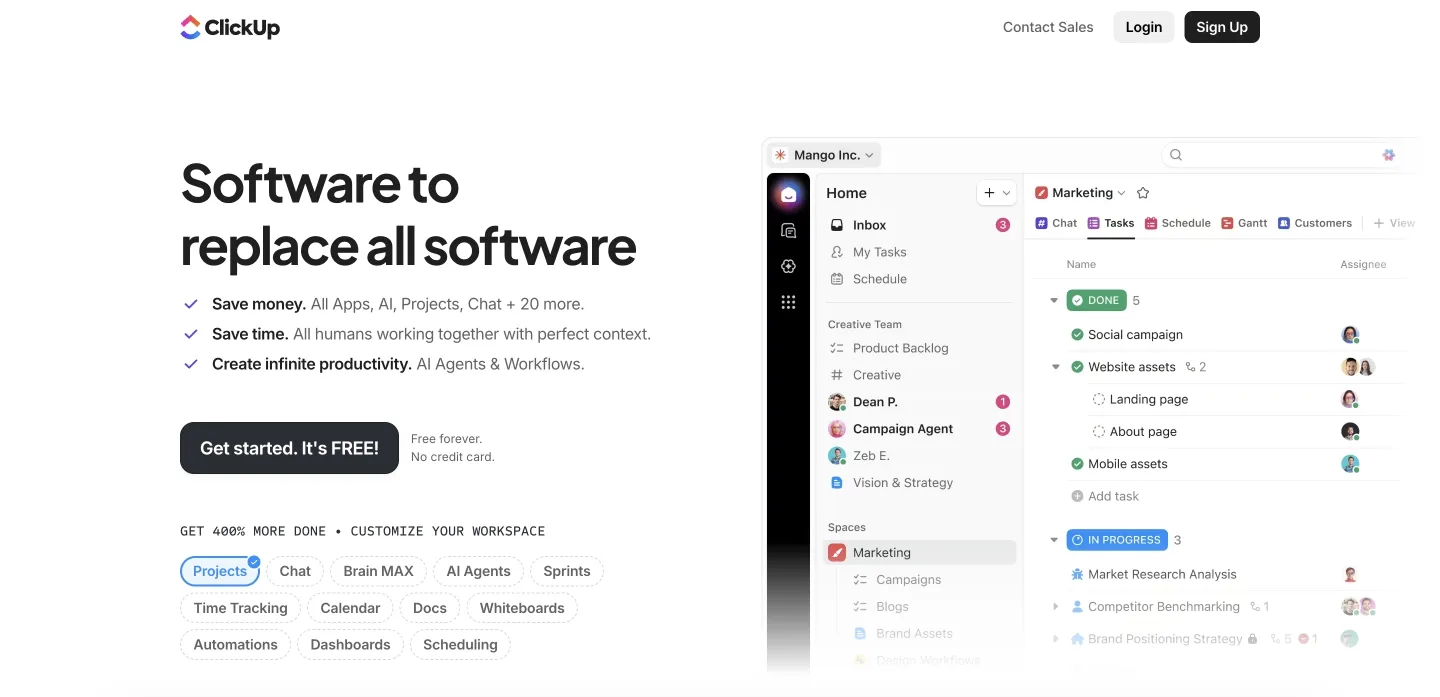
Why it’s useful: quick setup, customizable views, and a workspace you can shape per project without turning it into an “IT project.”
Pricing: starts at $7/user/month (free plan available).
Monday.com — best for visual planning and team-friendly dashboards.
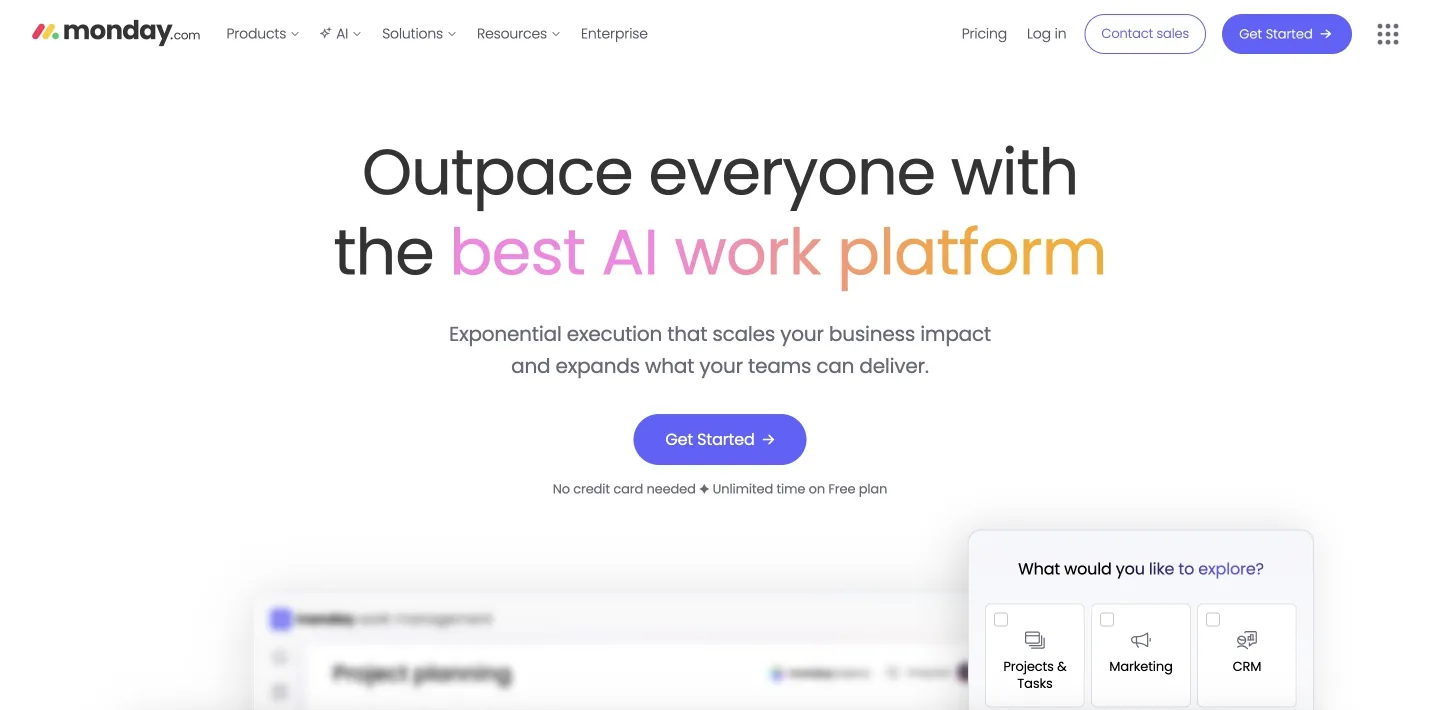
Why it’s useful: strong visualization (boards, timelines, dashboards) and automations that work well for marketing/ops teams.
Pricing: starts at $9/user/month (free plan with limits).
Asana — best for teams that rely on integrations and automation.
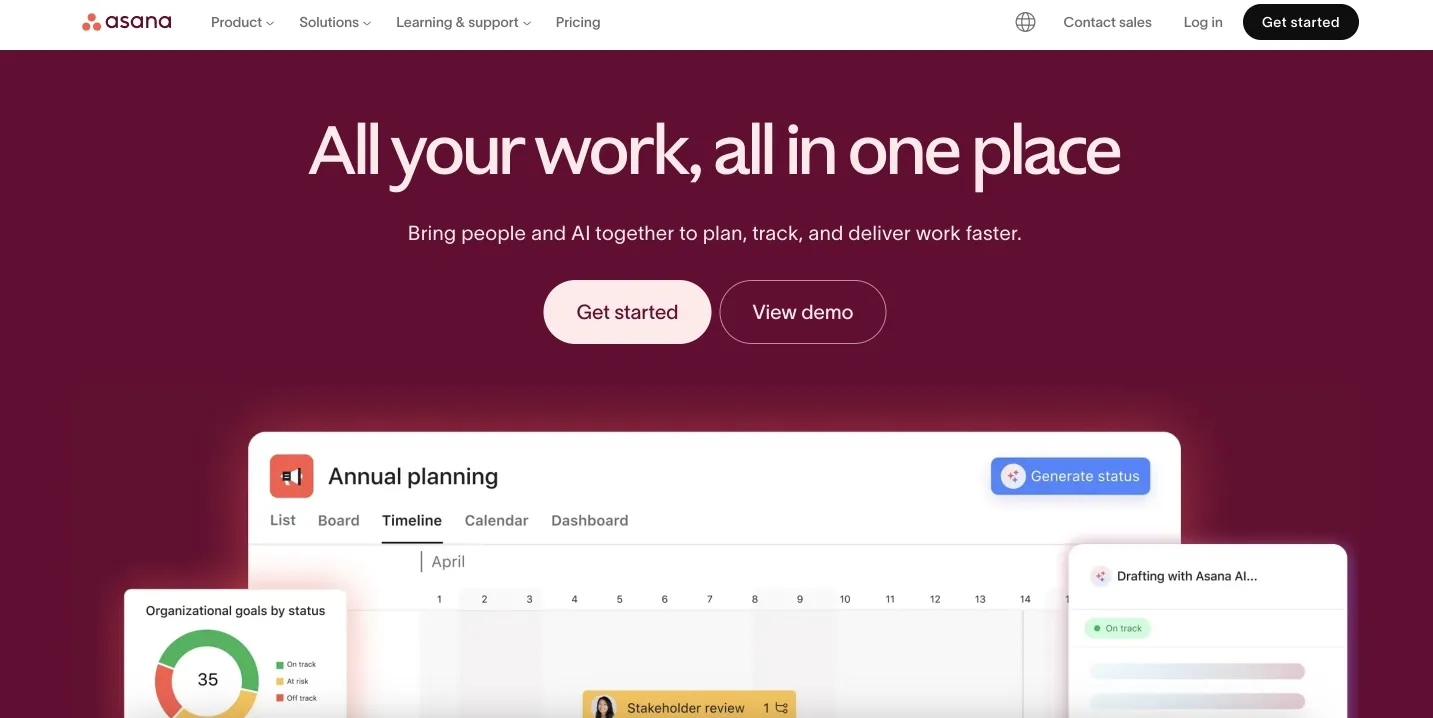
Why it’s useful: strong integrations and automation (helpful when work spans many tools).
Pricing: starts at $10.99/user/month (free plan with automation limits).
ProofHub — best for teams that want project management and collaboration in one workspace.
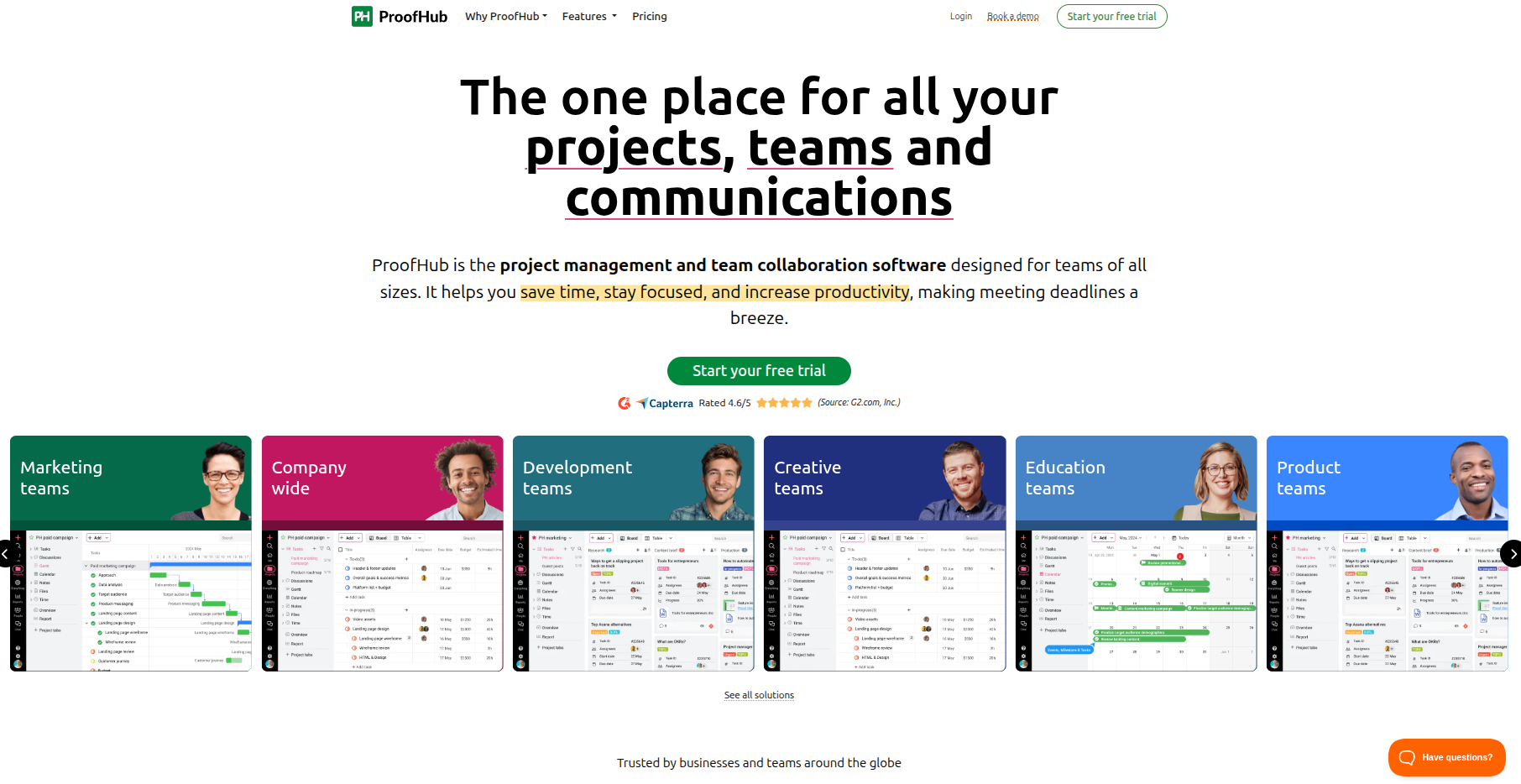
Why it’s useful: combines task management (Gantt charts, calendars, workflows, reports) with communication, file sharing, and proofing in one place.
Pricing: starts at a flat fee of $45/month (unlimited users).
AdaptiveWork (Clarizen) — best for portfolio-level visibility and exec reporting.
Why it’s useful: dashboards, workload views, and portfolio reporting when leadership needs one place to see progress across projects.
Pricing: starts at $45/month (demo available).
Client delivery (agencies, services, delivery teams)
Teamwork — best for delivery teams that need dependencies and time tracking.
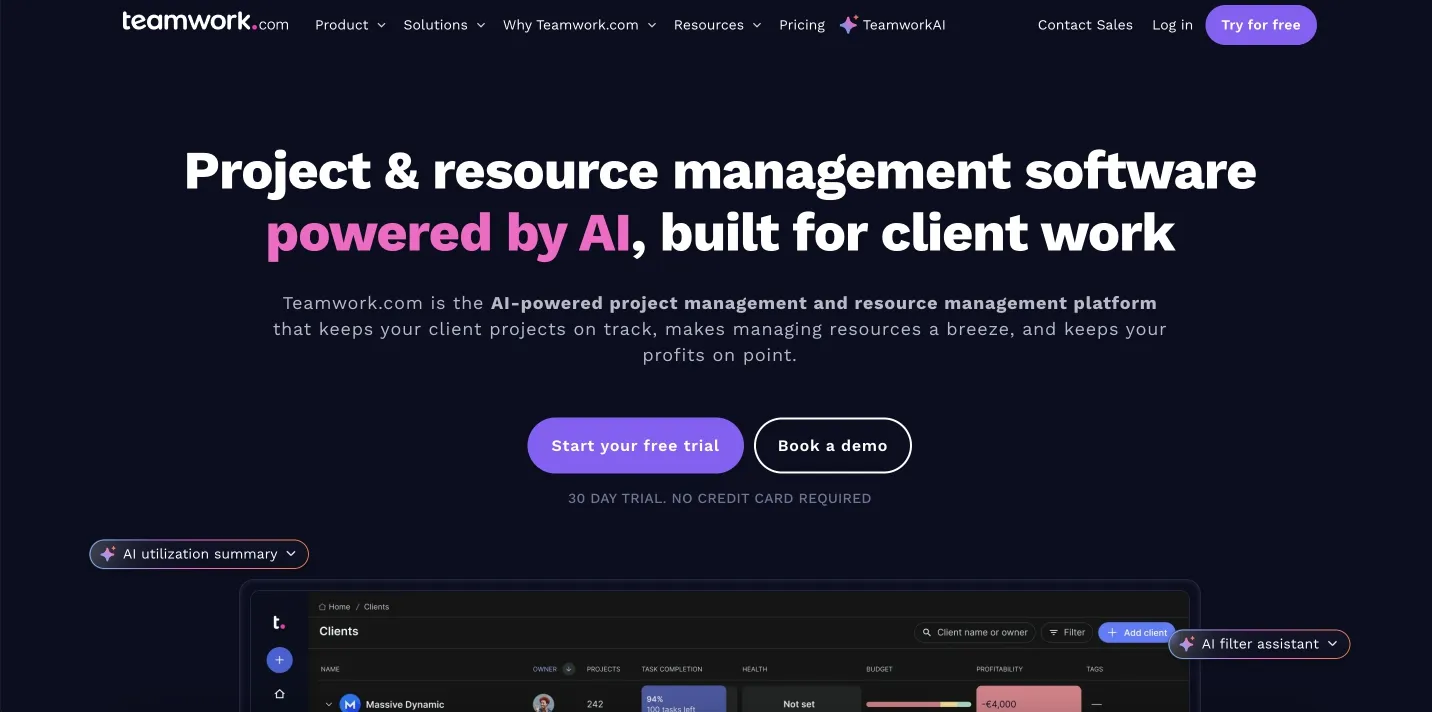
Why it’s useful: breaks work into actionable tasks, supports dependencies, tracks workload/hours, and helps manage delivery at scale.
Pricing: starts at $9.99/user/month (free plan available).
Freedcamp — best for “lots of features without enterprise pricing”.
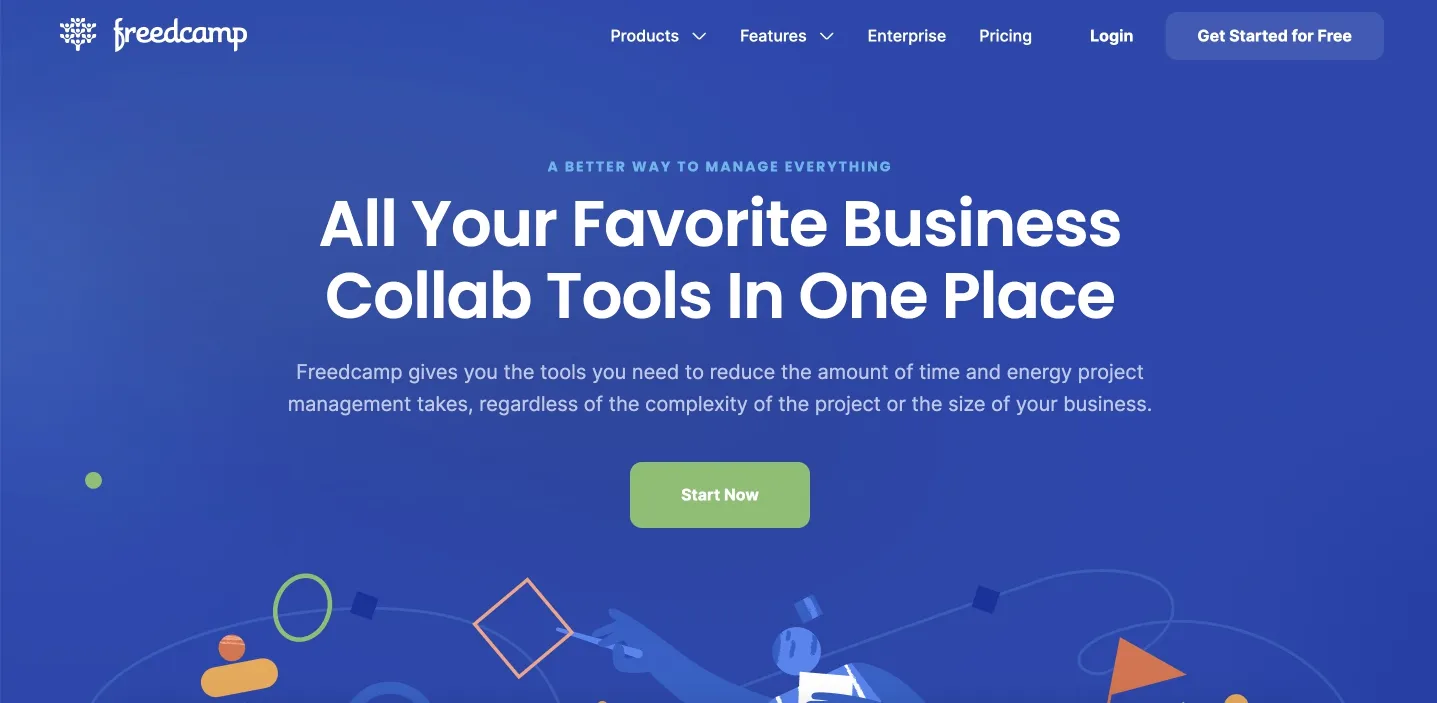
Why it’s useful: scales from small teams to larger orgs; includes time tracking and a knowledge base, with optional add-ons for CRM and client workflows.
Pricing: starts at $2.49/user/month (free plan available).
Basecamp — best for simple coordination with minimal setup.
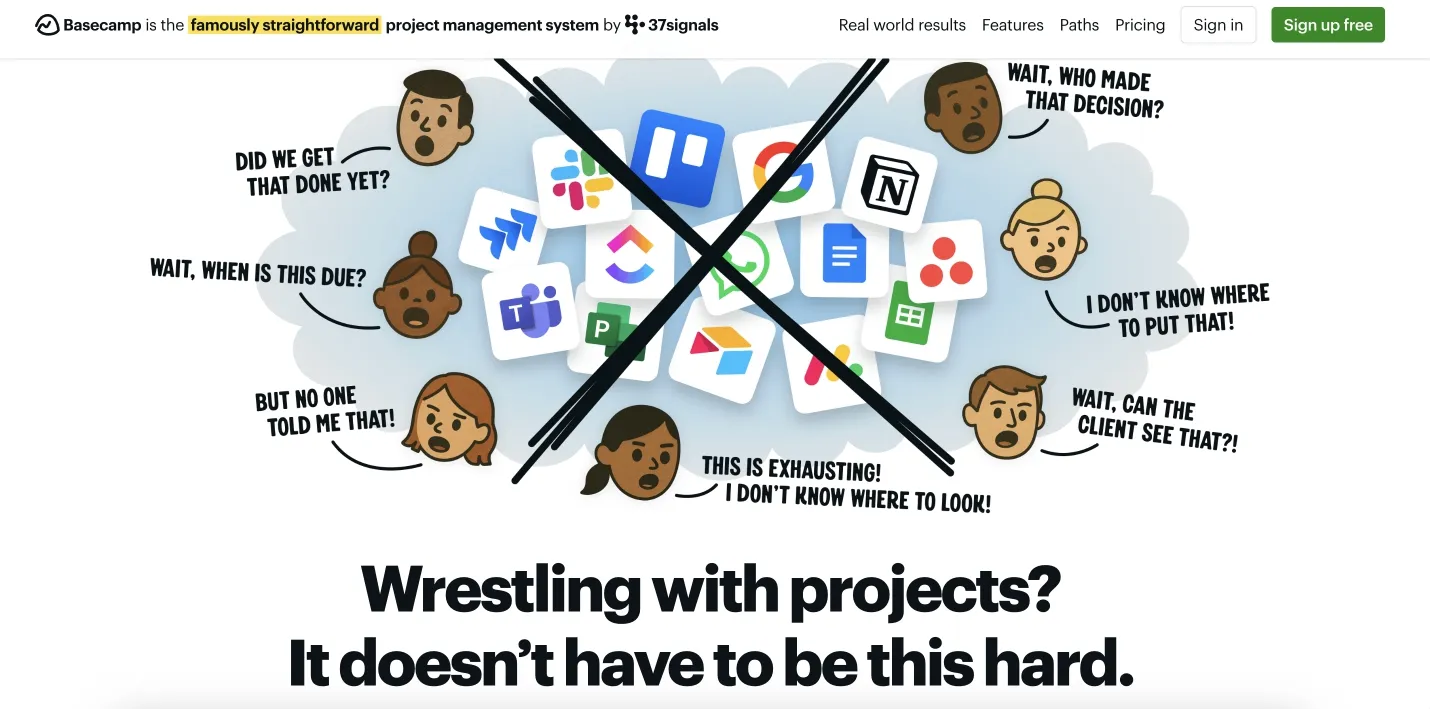
Why it’s useful: straightforward coordination, low overhead, and client-friendly communication.
Pricing: starts at $15/user/month (trial available).
Chat-first collaboration (speed + async communication)
Slack — best as a communication hub and integrations layer.
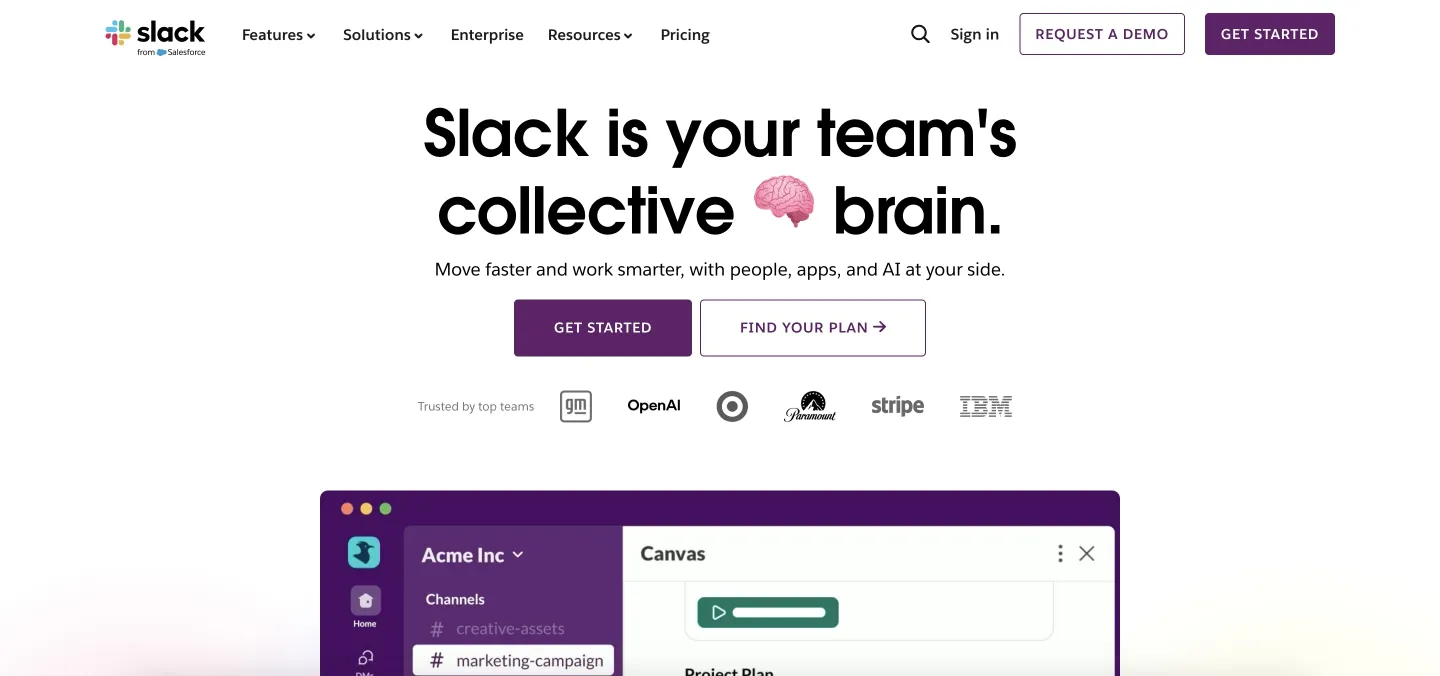
Why it’s useful: channels, search, Slack Connect, and a huge ecosystem of apps and automations.
Pricing: starts at $4.38/user/month (trial available).
Flock — best for teams that want a calmer, minimal chat experience.
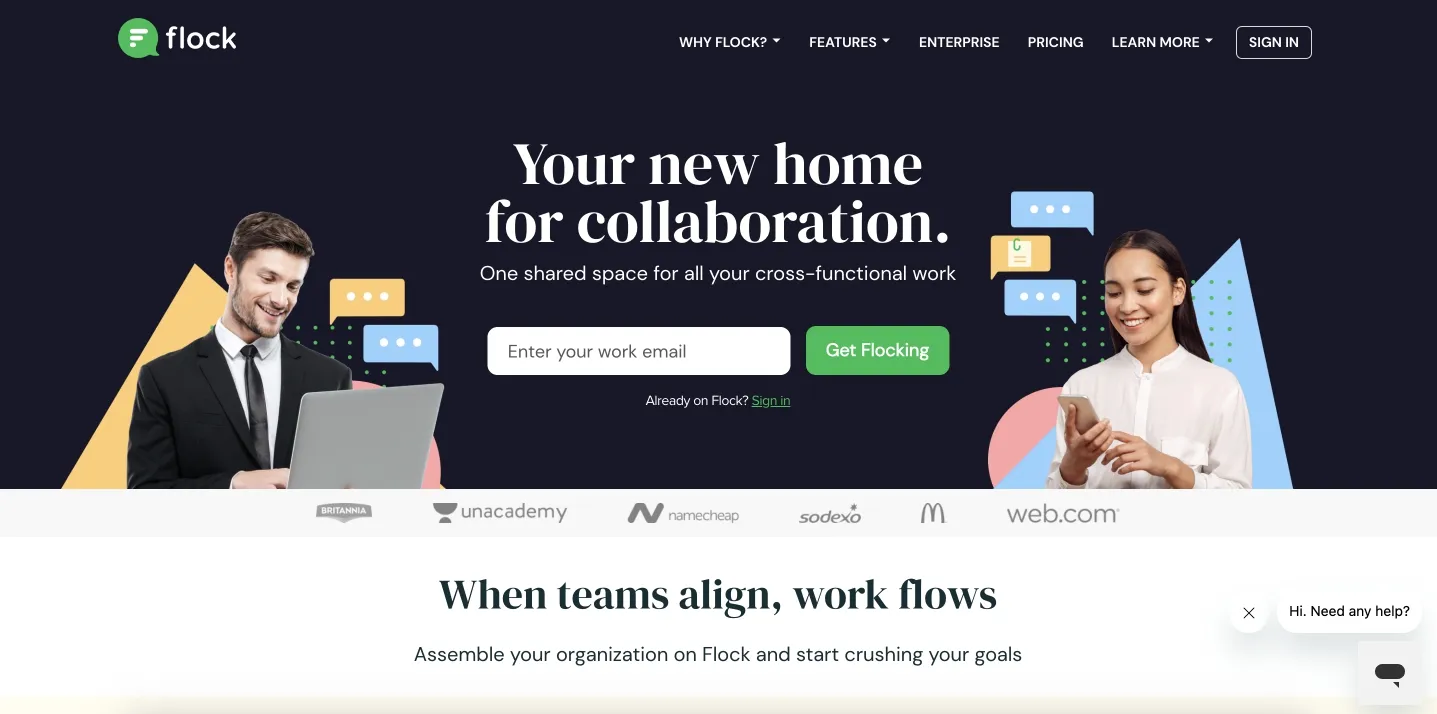
Why it’s useful: lightweight communication without as much noise, useful for teams that want fewer distractions.
Pricing: starts at $4.50/user/month (free plan available).
Microsoft Teams — best for Microsoft 365 organizations.
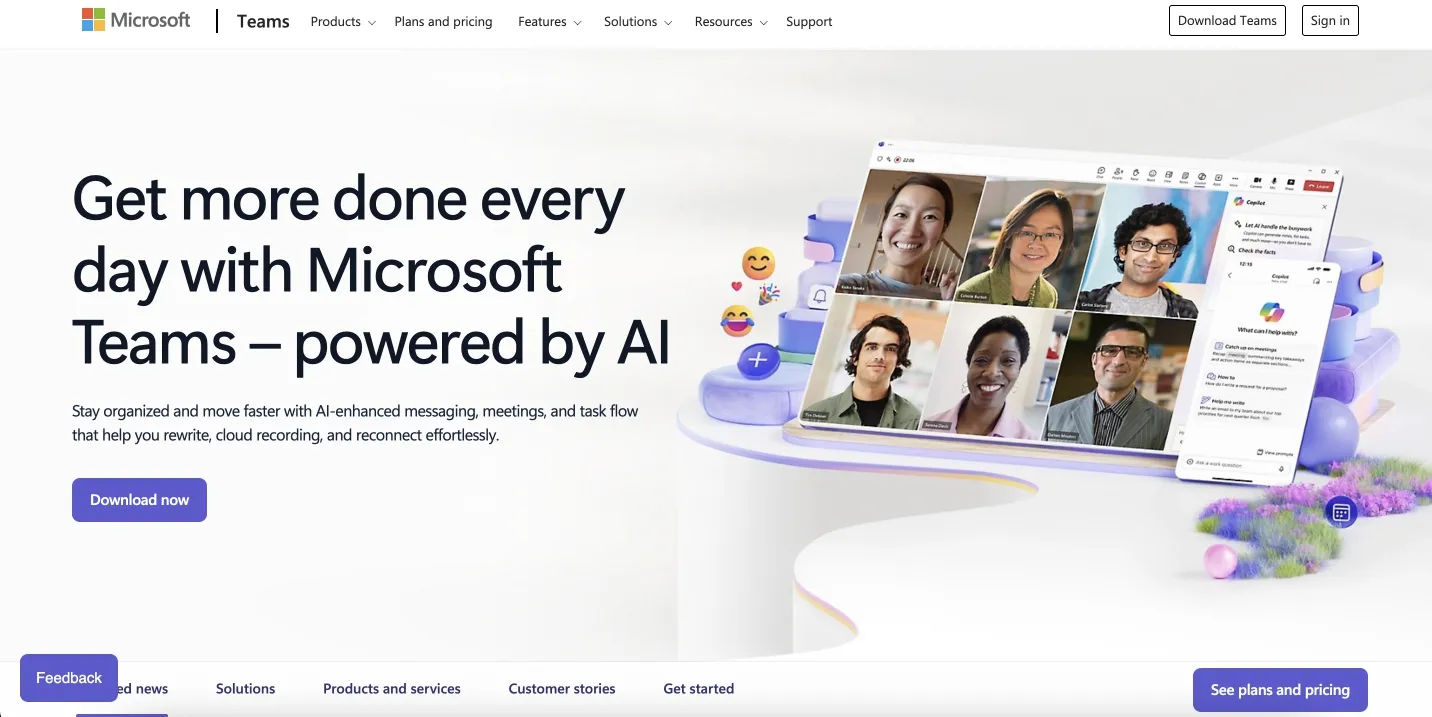
Why it’s useful: chat, calls, meetings, and file collaboration in one place — especially strong if your company already lives in Microsoft 365.
Pricing: starts at $4.00/user/month (Teams Essentials, billed annually).
Whiteboards & workshops (brainstorms, mapping, discovery)
Miro — best for structured visual collaboration.
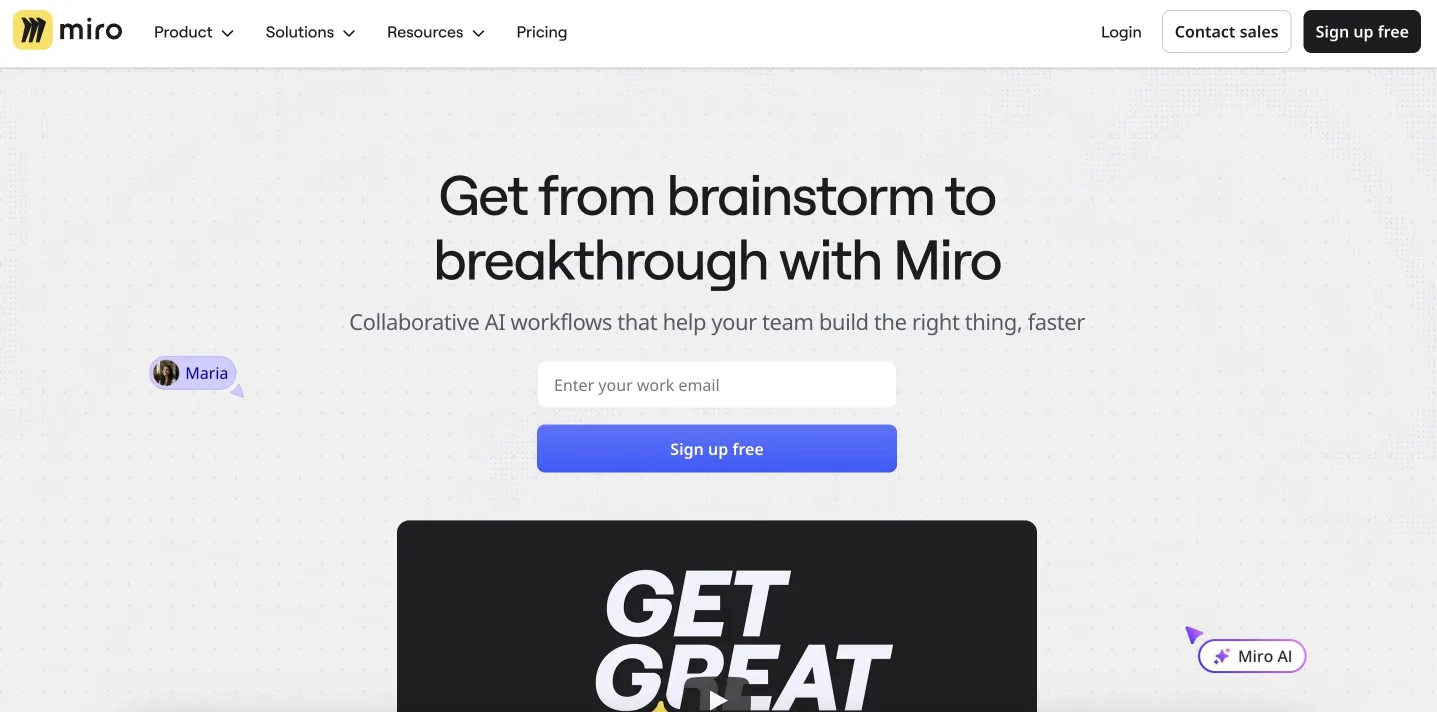
Why it’s useful: templates for workshops, mapping, and discovery, plus integrations to turn workshop outputs into tasks.
Pricing: starts at $10/month (free plan includes limited boards).
FigJam — best for lightweight workshops and async alignment.
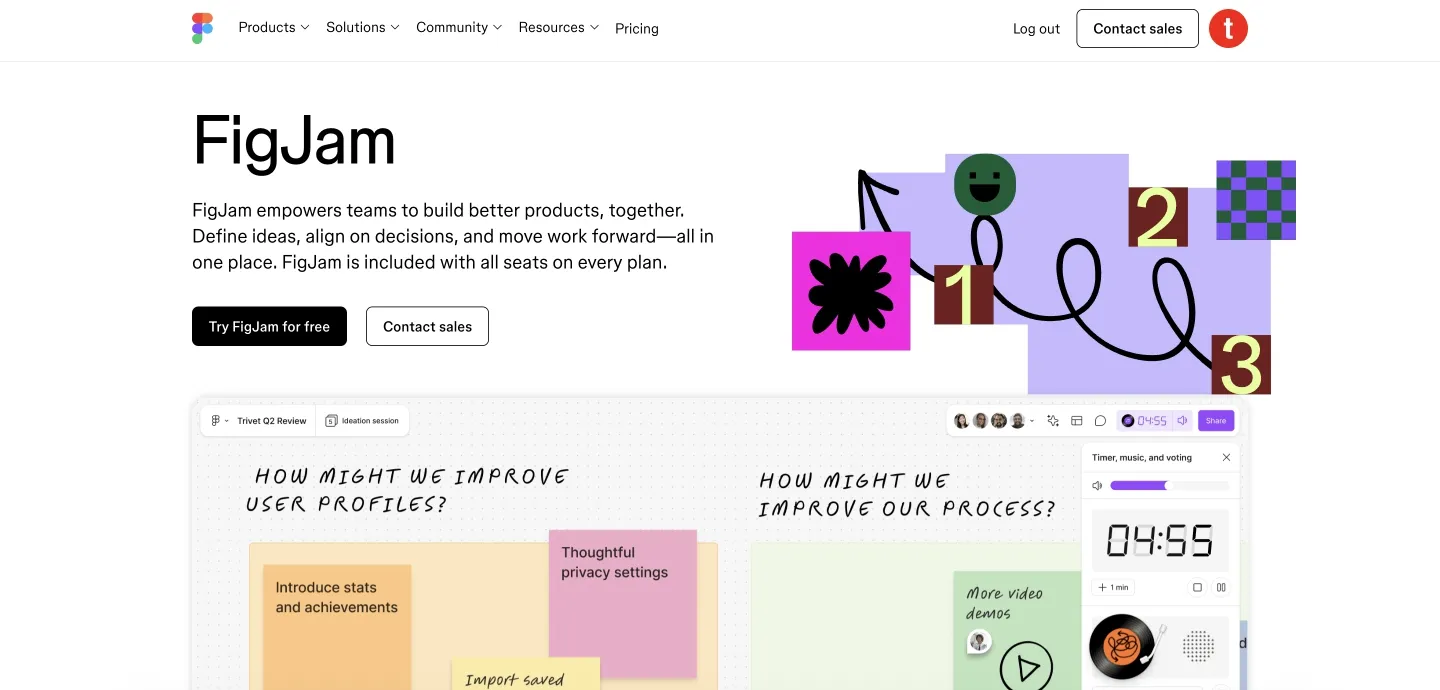
Why it’s useful: quick brainstorming and mapping, especially if your team is already in Figma.
Pricing: free starter plan; paid plans start at $3/month per Collab seat.
Docs-first collaboration (knowledge base + project context)
Notion — best for teams that live in docs and need light task tracking.
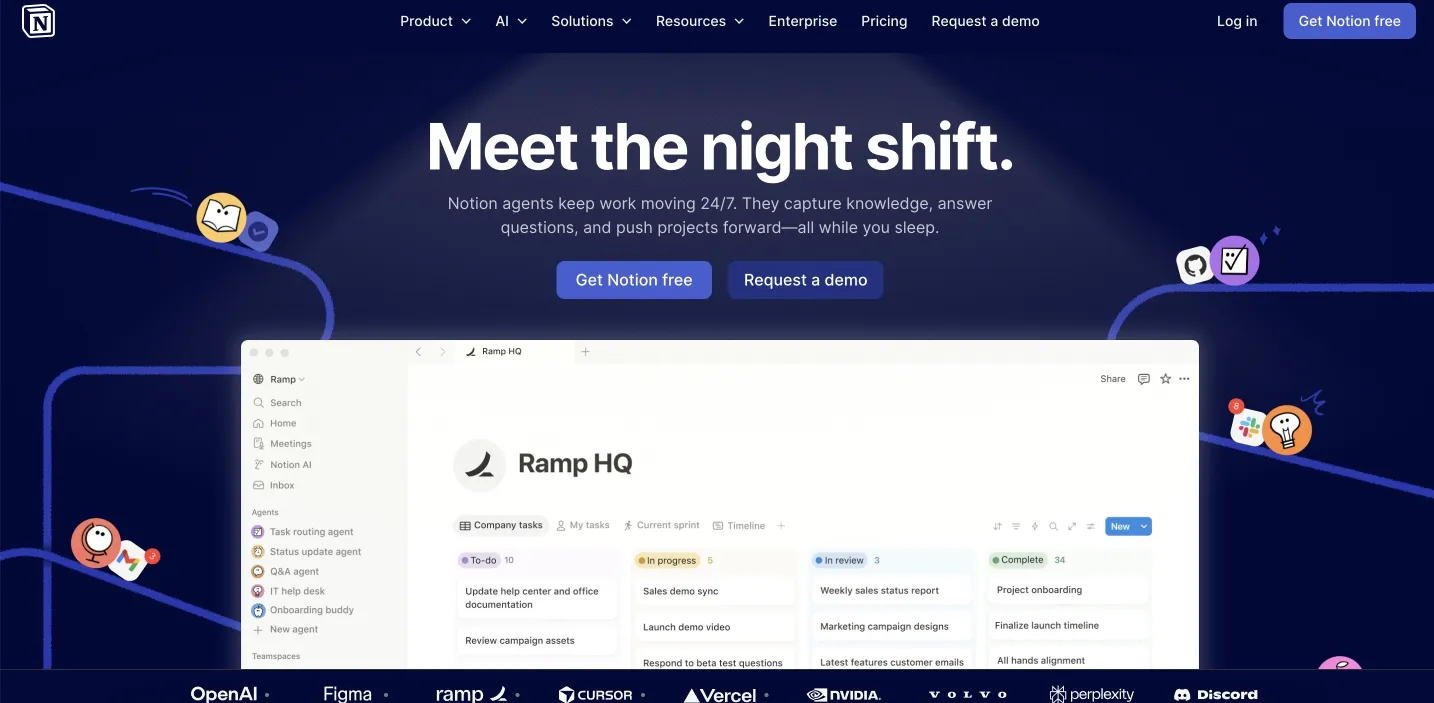
Why it’s useful: documents, databases and lightweight project tracking, with built-in AI for search/summaries and workflow helpers.
Pricing: starts at $8/user/month (free plan available with limits).
Bit.ai — best for centralized documentation with fast, AI-powered Search.
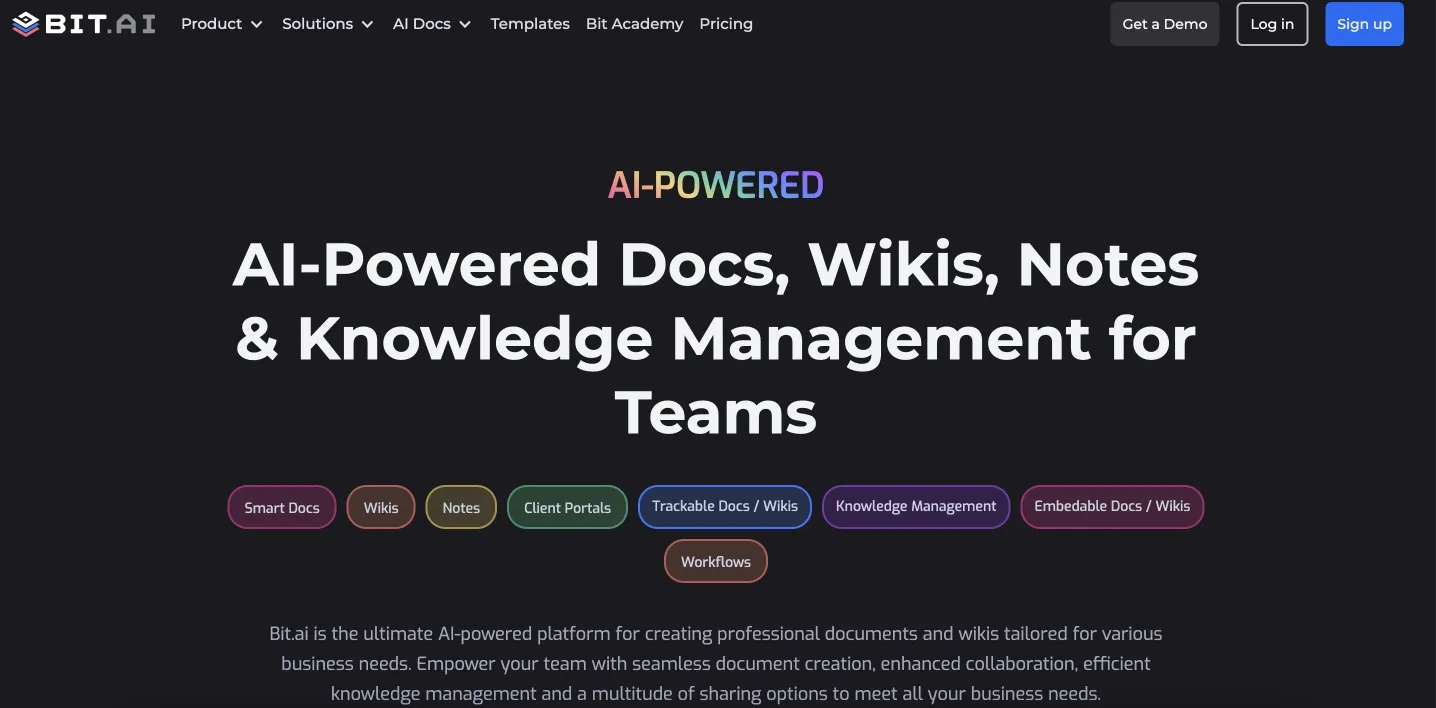
Why it’s useful: Launch a hub for docs, wikis, and project resources with a clean layout and AI search that brings up the right information instantly.
Pricing: starts at $12/user/month (free plan available).
Customizable platforms
Podio — best for teams that want a customizable ops hub.
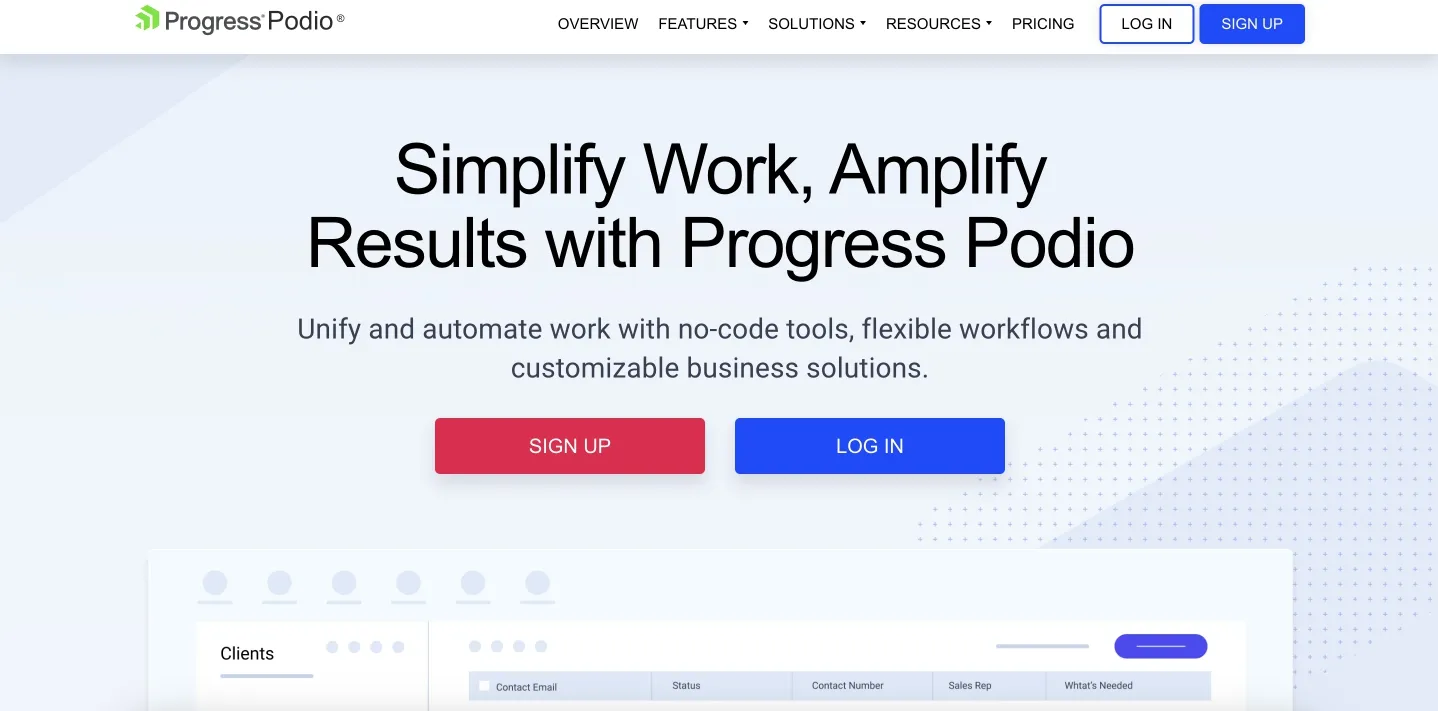
Why it’s useful: highly customizable workflows and “apps,” good when you want to build your own internal workspace.
Pricing: starts at $14/month (trial available; add-ons may cost extra).
Stackby — best for spreadsheet-style project management with powerful database integrations.
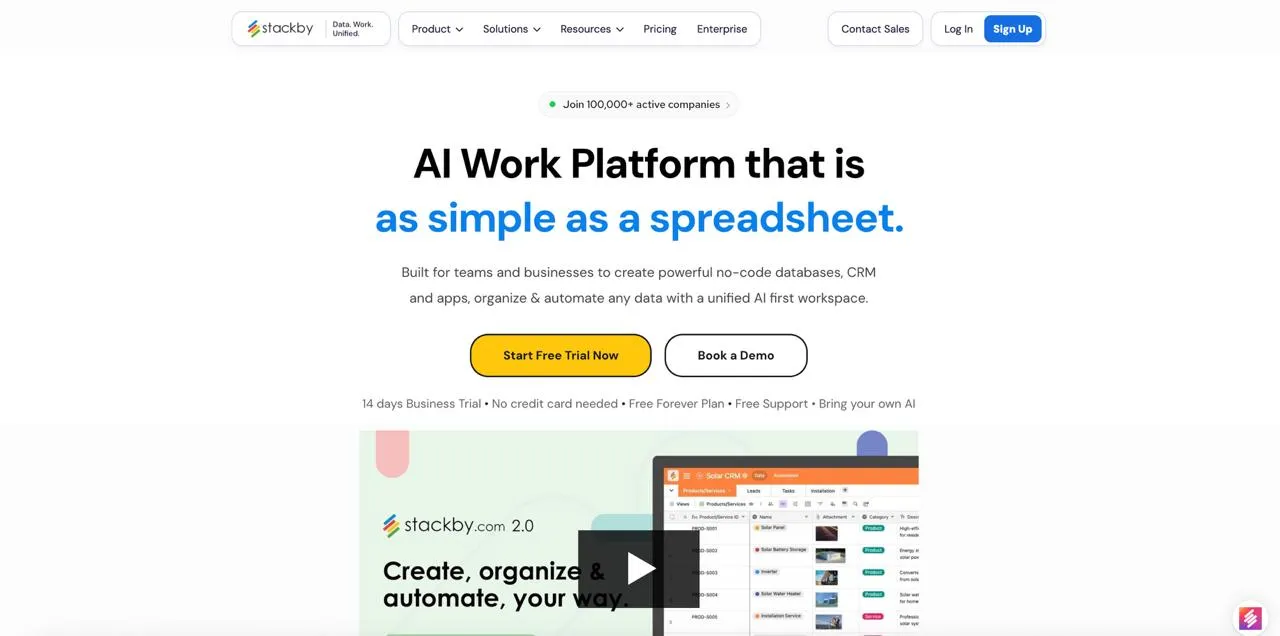
Why it’s useful: combines the familiarity of spreadsheets with the power of databases and built-in APIs (Google Analytics, Ads, Shopify, etc.), making it easy to manage projects, marketing campaigns, and operational workflows in one customizable workspace — without complex setup.
Pricing: starts at $5/user/month (free plan available).
Proofing, versions & approvals (when “final” must be a real status)
Pics.io — best when collaboration breaks on files, versions, and controlled sharing.
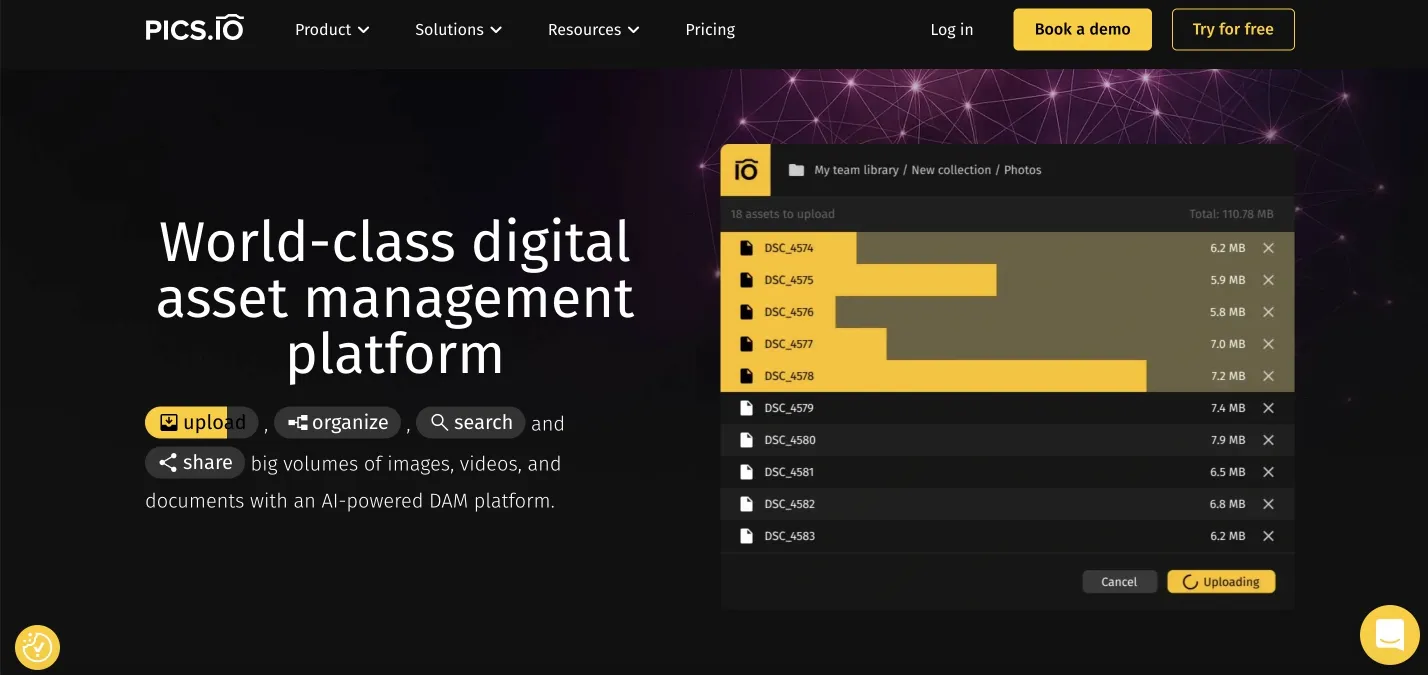
Why it’s useful: version history, file comparison, approval clarity, granular permissions, and external sharing via portals/links — so “approved” becomes a real status and drafts don’t leak.
Pricing: starts at $100/month (trial available).
Final takeaway
The best collaboration tools are the ones that match how your team actually works.
A strong setup usually combines:
- project management + task management (so you can organize tasks, assign owners, and track progress across multiple projects),
- team communication that fits your style (instant messaging, group messaging, video calls, screen sharing),
- and, when files and approvals are the bottleneck, a dedicated layer for version control and controlled file sharing.
That’s how you keep work visible, feedback traceable, and teams aligned.
FAQ
Do we need a project management tool if we already use Slack or Microsoft Teams?
Usually, yes. Slack/Teams are great for communication, but they’re not a reliable system of record. Tasks get buried in threads, ownership becomes fuzzy, and decisions are hard to audit later.
Treat Slack or Microsoft Teams as team communication, while project management and task management tools handle task tracking, ownership, and visibility across multiple projects.
What if approvals and “latest file” confusion are our biggest problems?
That’s a sign you’re missing the content proofing layer. Most PM tools handle tasks well, but they don’t reliably handle versions, comparisons, approval status, and controlled sharing with external partners.
In that case, keep your PM tool for planning and add a dedicated layer like Pics.io — so approval status is trackable, version history stays attached to the asset, and external sharing doesn’t expose drafts.
What should we prioritize for remote or distributed teams?
For remote and distributed teams, look for collaboration software that supports strong search, clear task assignments, async-friendly updates, and controlled sharing — so everyone stays aligned without constant meetings.
What usually helps most:
- Async-friendly status updates (less “status meeting” dependency)
- Strong search (messages + docs + assets)
- Clear approval rules (who signs off, and where it’s recorded)
- Controlled external sharing (partners see only what’s approved)
We’re a marketing/creative team — what’s the most common collaboration failure?
Approvals happen in chat, files live in random folders, and nobody is fully sure what’s final. The fix is simple: keep project tracking in your PM tool, but move versions + approvals + sharing into a system designed for assets.
Did you enjoy this article? Give Pics.io a try — or book a demo with us, and we'll be happy to answer any of your questions.
Author

Akinai is a customer support leader with hands-on experience managing teams of 5+ people. She holds a Bachelor’s degree in International Business and has UX/UI design training, including a second-place finish at RadCode. Known for bringing the customer perspective into leadership discussions, she regularly represents user needs in conversations with senior management and cross-functional stakeholders.


